
-

Commentary
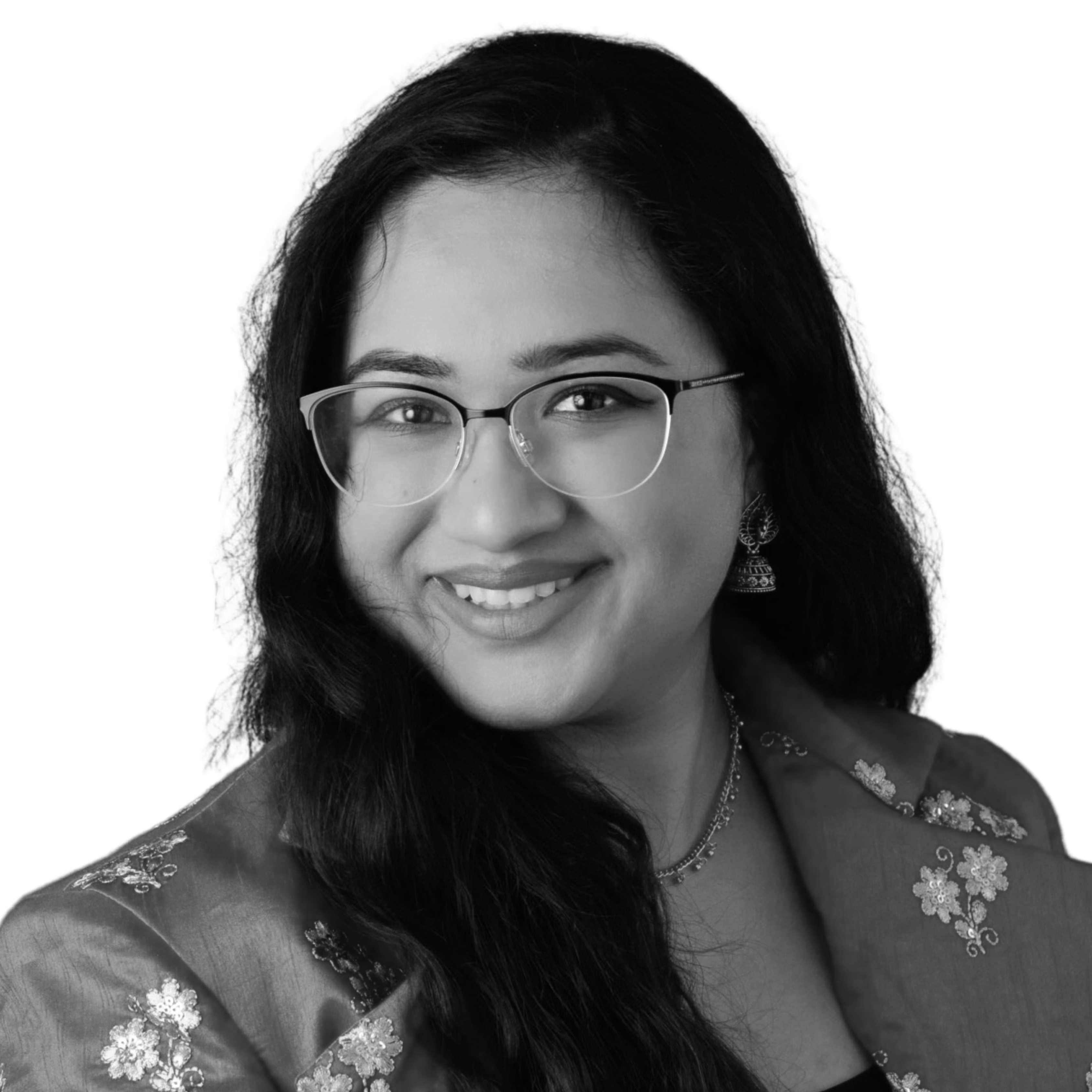
Shivani Parikh is a 3L at Fordham University School of Law, where she is the Diversity, Equity, and Inclusion Editor for the Voting Rights & Democracy Forum as well as a Stein Scholar for Public Interest and Ethics, a REAL Scholar and mentor, and a Crowley Scholar in the Leitner Center for International Law and Justice. She holds a bachelor's degree in Development Sociology from Cornell University and is the founder & executive director of the South Asian Legal Defense Fund. She will be working as a unionized housing defense attorney in Queens after graduation.
By Shivani Parikh
April 9, 2024 9:00 AM
On December 5, 2023, the Asian American Legal Defense and Education Fund (AALDEF) filed an appeal in its suit against the New York City Districting Commission and Board of Elections, as well as the state Board of Elections, challenging—under the city charter—the lawfulness of the New York City Council district map. This litigation began in February 2023, when Jerry Vattamala, director of the AALDEF Democracy Program, sued on behalf of D.R.U.M. (Desis Rising Up and Moving) and eighteen Indo-Caribbean and South Asian residents of Richmond Hill/South Ozone Park (RHSOP) in Queens, New York. Though this community votes cohesively in city council elections, they have been unable to have any meaningful impact on city politics due to gerrymandering.
Such gerrymandering runs counter to the city charter, which mandates that towns or blocks that could be placed in multiple districts be kept together and assigned to a single district, rather than divided up. Furthermore, there are explicit protections in the New York City Charter, which states that districting commissions must draw maps that, “to the maximum extent practicable,” ensure “the fair and effective representation of racial and language minorit[ies].” Thus, if the district map remains as-is, it will be harder for this vibrant and cohesive community to have a voice in city government.
Queens, the most ethnically and racially diverse of New York City’s five boroughs, has been home to a flourishing South Asian population for decades. South Asian immigration to the United States dates back to the late 19th century, though it gained momentum after the Immigration and Nationality Act of 1965 abolished the national origins quota system, which had heavily favored immigrants from Europe.1See Gabriel J. Chin, The Civil Rights Revolution Comes to Immigration Law: A New Look at the Immigration and Nationality Act of 1965, 75 N.C. L. Rev. 273 (1996). Economic opportunities in the technology, healthcare, and education sectors were particularly attractive in places like New York City, especially Queens. Once a few individuals and families from South Asia settled in the borough, they often sponsored relatives to join them through policies allowing family reunification, leading to chain migration. They established cultural and religious institutions in the borough, such as the Sri Maha Vallabha Ganapati Devasthanam Hindu temple, the Islamic Center of Jackson Heights mosque, the Sikh Center of New York gurudwara, the South Asian Community Center, and the Patel Brothers grocery store. Today, existing South Asian communities in Queens provide crucial support to newcomers, helping them navigate challenges such as finding housing, seeking employment, and accessing social services.
RHSOP, the area of Queens at issue in this litigation, is home to many immigrant and native-born New Yorkers of Guyanese, Trinidadian, Surinamese, Punjabi, and Bangladeshi descent. This Indo-Caribbean population traces its roots back to the indentured labor system used by European colonial powers in the 19th and early 20th centuries following the abolition of slavery.2See Ron Ramdin, Arising from Bondage: A History of the Indo-Caribbean People (1996). British, Dutch, and French colonial authorities brought millions of indentured laborers from India to work on plantations in the Caribbean to replace African slaves. These laborers worked primarily in sugar, cocoa, rice, and other agricultural industries.3John Allen Perry, A History of the East Indian Indentured Plantation Worker in Trinidad, 1845-1917 (1969) (Ph.D. dissertation, LSU). Indo-Caribbeans have preserved their cultural heritage through traditions such as food, music, dance, language, religion, and festivals, while also integrating into broader Caribbean society and the diaspora as well.4Sunanda Sen, Indentured Labour from India in the Age of Empire, 44 Soc. Sci. 35–74 (2016).
Such migration and integration are evident when walking along Atlantic and Liberty Avenues, near JFK International Airport, in the Little Punjab and Little Guyana neighborhoods, whose populations draw heavily from the Indian state and South American country, respectively. Notably, immigrants from Guyana are the second-largest foreign-born group in Queens after those from China. Little Guyana contributes to Queens’ reputation as one of the most diverse boroughs in New York City, with various international districts enriching its cultural landscape.
The current litigation is seeking fair representation for this community. City and state officials failed to heed warnings from community members that a South Asian voting bloc was fragmented due to district lines that ran down Liberty Avenue and cut straight through the center of the Punjabi and Indo-Caribbean population. Under the current maps, Richmond Hill is mostly kept whole but is included in District 29, which also comprises parts of Forest Hills and Kew Gardens, diluting the power and unity of the South Asian vote.5NYC Dist. Comm’n, New York City Districting Commission Final Agency Report 2022–2023, https//www.nyc.gov/assets/districting/downloads/pdf/Final-Agency-Report.pdf (last visited Apr. 7, 2024). Forest Hills and Kew Gardens have substantive Latino and East Asian blocks, but fewer South Asians live in those neighborhoods.6NYC Small Bus. Serv., Richmond Hill Queens: Commercial District Needs Assessment, https//www.nyc.gov/assets/sbs/downloads/pdf/neighborhoods/avenyc-cdna-richmondhill.pedReport.pdf (last visited Apr. 7, 2024). Meanwhile, South Ozone Park has been split into two districts, District 28, which includes a portion of Southeast Queens, and District 32, which includes parts of the Rockaway peninsula, Howard Beach, Woodhaven, and Glendale.7NYC Dist. Comm’n, supra note 5.
On May 5, 2023, a state supreme court judge said that the maps were drawn lawfully and that any relief granted to the petitioners would impact other upcoming elections.8Desis Rising Up and Moving et al. v. N.Y.C. Dist. Comm’n, No. 151762/2023 (Sup. Ct. Feb. 24, 2023). The court denied the petitioners’ request for a preliminary injunction, stating that they failed to show entitlement to relief and that granting their request would cause significant prejudice to candidates, voters, and taxpayers. Additionally, the court rejected the petitioners’ plea to vacate the district map and required the districting commission to certify an amended plan. Although the petitioners were not barred by delay, they were found to fail to demonstrate that the certification process was unlawful or violated fair representation mandates. The court agreed with the respondents that the Commission adequately considered various factors in creating the map and that substituting its judgment for that of the Commission was inappropriate.
Next, in June 2023, before the Third Department, Jessie Amunson, representing D.R.U.M., said the Supreme Court’s ruling “runs afoul” of the fundamental principle that courts should favor a legislative solution, such as the Independent Redistricting Commission (IRC), over a map created by a single special master or judge. “Under that principle, a court can, and should, order the IRC to re-submit congressional district lines in the ample time available before the next election cycle,” she argued. A process based on public input, she said, is what New York voters envisioned when they created the IRC.
On July 13, 2023, the majority of a Third Department panel held that the Court of Appeals did not intend for the special master’s lines to supplant the IRC process for the remainder of the decade. “The right to participate in the democratic process is the most essential right in our system of governance,” reads the majority’s opinion. “The procedures governing the redistricting process, all too easily abused by those who would seek to minimize the voters’ voice and entrench themselves in the seats of power, must be guarded as jealously as the right to vote itself; in granting this petition, we return the matter to its constitutional design. Accordingly, we direct the IRC to commence its duties forthwith.”
The New York IRC sent new maps to the legislature for approval in late February. However, no Asian American was appointed to this 10-person commission when people of Asian descent comprise more than 11 percent of the state population. Instead, the proposed maps were approved the same day they were submitted and, as of the writing of this piece, Governor Kathy Hochul is expected to sign off on them soon.
On appeal, AALDEF’s Petitioners-Appellants do not challenge the trial court’s denial of injunctive relief considering the City Council elections occurred on November 7, 2023. However, they appeal the lower court’s dismissal of the Article 78 petition on the merits, which—if left undisturbed—will leave the adversely affected constituents without a remedy until at least the next round of districting in 2033.
The significance of this legal challenge lies in its broader implications for democratic principles and electoral fairness. The failure of city and state officials to address the concerns of community members underscores the need for greater attention to the issue of voter suppression and gerrymandering in diverse neighborhoods like RHSOP. If districting is not conducted transparently and with the genuine intent to ensure fair representation, it raises doubts about the integrity of the electoral process, particularly for immigrant communities who already face language barriers. Furthermore, if legal decisions are influenced by the potential disruptions to the electoral calendar rather than the merits of the case, it raises questions about the prioritization of procedural considerations over the protection of democratic principles. Summarily, the decision by the state supreme court to uphold the legality of the district maps, despite their adverse impact on the South Asian community, reflects a missed opportunity to rectify systemic injustices and promote inclusive democracy.
The racial and economic underpinnings of the housing discrimination crisis plaguing the neighborhood underscores why voter disenfranchisement has remained unilluminated in its breadth and depth until now. In 2020, Annetta Seecharran, Executive Director of the Chhaya Community Development Corporation, a non-profit focused on housing and economic justice, provided Congressional testimony outlining this “modern-day redlining”: “Even though South Asian organizations are under-resourced in New York City, [Chaaya] had to provide the support that our communities need, from crisis to crisis. In Queens, Desis Rising Up and Moving organizes working-class South Asian and Muslim immigrants, Adhikaar works with Nepal-speaking communities, and Jahajee Sisters addresses issues facing Indo-Caribbean communities. Yet, this patchwork of South Asian organizations is insufficient to address the vast challenges in our communities, particularly because we are often on the frontlines of crises.”
Though her testimony centers primarily around the housing insecurity and challenges to homeownership that Chhaya’s clients face, it asserts the holistic and ongoing need for recovery, redress, reinvestment, and reconciliation that South Asian immigrants in New York City deserve.
In light of the ongoing legal battle surrounding the New York City Council district map, which has faced challenges regarding fair representation for the South Asian community in neighborhoods like Richmond Hill/South Ozone Park, the 2033 redistricting cycle holds critical importance. Despite efforts by the (AALDEF) to address gerrymandering and voter suppression, the failure of city and state officials to prioritize electoral fairness underscores systemic issues. The decision to uphold the legality of the district maps, despite their unjust impact on the South Asian community in particular, reflects a missed opportunity to rectify injustices and promote inclusive democracy. As the case stands now, the prospect of meaningful change may hinge upon future redistricting efforts, emphasizing the ongoing struggle for equitable representation and the protection of democratic principles.
References:
Related